

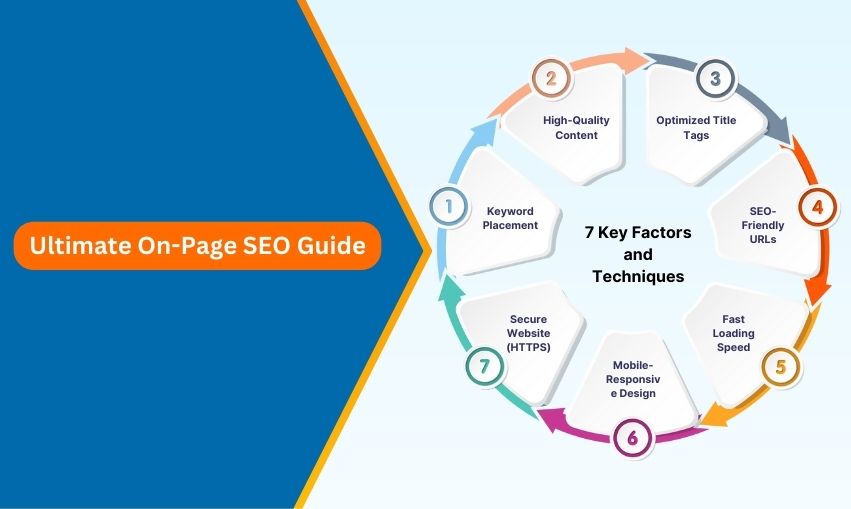
When starting a website or blog, getting found by search engines like Google is crucial for attracting visitors. While many aspects of search engine optimization (SEO) exist, on-page SEO focuses on optimizing elements directly on your website to improve its ranking. These adjustments make your content more appealing to both users and search engine crawlers, signaling the relevance and quality of your pages for specific search queries. Mastering these foundational techniques can significantly boost your online presence and bring more organic traffic.
Overview
- On-page SEO tips involve optimizing elements on your actual website, not external factors.
- Keyword research is foundational for understanding what your audience searches for and how to integrate those terms naturally into your content.
- Crafting compelling title tags and meta descriptions is vital for click-through rates and informing search engines about page content.
- High-quality, well-structured content that directly addresses user intent is paramount for achieving and maintaining strong rankings.
- Optimizing images, improving page loading speed, and ensuring mobile responsiveness are crucial technical on-page SEO tips for user experience.
- Internal linking helps search engines understand your site structure and distributes link equity, while external links build credibility.
- Prioritizing user experience through readability and site performance is key to long-term SEO success.
Fundamental Content and Keyword On-Page SEO Tips
The cornerstone of effective on-page SEO tips begins with understanding your audience and their search intent. Keyword research isn’t just about finding popular terms; it’s about identifying phrases your potential visitors are typing into search engines. Tools like Google Keyword Planner or SEMrush can help you identify relevant keywords with reasonable search volume and competition. Once you have your target keywords, the art is to integrate them naturally into your content. Stuffing keywords will hurt your rankings, not help them. Focus on creating high-quality, valuable content that genuinely answers questions or solves problems for your readers. Structure your content with clear headings (H1, H2, H3, etc.) which also provide opportunities to include relevant keywords and improve readability. Your primary keyword should ideally appear in your H1 heading and within the first paragraph of your content. Remember, content quality is paramount; even in the US, Google prioritizes helpful, authoritative content.
Technical and Structural On-Page SEO Tips for Better User Experience
Beyond the words on your page, several technical aspects contribute significantly to successful on-page SEO. Page loading speed is a critical factor; users expect fast-loading websites, and search engines reward them. Tools like Google PageSpeed Insights can help you identify areas for improvement, such as optimizing images, leveraging browser caching, and minimizing code. Another non-negotiable among modern on-page SEO tips is mobile responsiveness. With a significant portion of web traffic coming from mobile devices, your site must adapt seamlessly to different screen sizes. A clunky mobile experience will deter users and signal to search engines that your site isn’t user-friendly. Furthermore, optimize your image files by compressing them and using descriptive alt text. Alt text not only helps visually impaired users but also gives search engines context about your images, which can improve your visibility in image searches. Finally, keep your URLs short, descriptive, and keyword-rich, making them easy for both users and search engines to understand.
Meta Elements and Click-Through Rate On-Page SEO Tips
When your page appears in search results, the title tag and meta description are your website’s first impression. Crafting compelling meta elements is one of the most impactful on-page SEO tips for attracting clicks. Your title tag, which appears as the clickable headline in search results and in the browser tab, should include your primary keyword, accurately describe the page’s content, and ideally be between 50-60 characters to avoid truncation. Make it catchy and enticing. The meta description, while not a direct ranking factor, significantly influences click-through rate (CTR). It’s a short summary of your page’s content, displayed beneath the title tag in search results. Aim for a meta description between 120-158 characters, include your primary keyword, and write it as a compelling call to action or a clear benefit statement. A well-written meta description can encourage users to choose your link over competitors’, even if your ranking is slightly lower.
Internal and External Linking On-Page SEO Tips
Linking strategies play a subtle yet powerful role in on-page SEO. Internal linking involves creating links from one page on your website to another page on the same website. This practice helps search engines understand the structure and hierarchy of your site, distributes “link equity” (or “link juice”) across your pages, and guides users through related content. When linking internally, use descriptive anchor text that includes relevant keywords for the destination page. For instance, instead of “click here,” use “learn more about content optimization.” External linking, or linking to other reputable websites, also forms part of effective on-page SEO tips. When you link out to high-authority, relevant external sources, you provide additional value to your readers and signal to search engines that your content is well-researched and credible. However, be judicious with external links; only link to sites that genuinely enhance your content’s quality and trustworthiness.